See what food, beer, taxis and attractions cost in Da Nang, where your budget goes, and how to save without cutting corners or tourist mark-ups.
Where Your Money Goes in Da Nang
The fear with any beach city is that "beach" quietly becomes code for "resort markup." Da Nang doesn't fully escape that — the strip along My Khe Beach charges more than the Han River side of town, and Ba Na Hills' cable car ticket alone can eat a budget traveler's entire daily food allowance. But broadly, Da Nang prices sit below Phu Quoc and Nha Trang for comparable quality, and well below Hoi An's Ancient Town restaurants, which have become notably expensive for what's often average food traded on atmosphere.
Numbeo's cost-of-living comparisons (useful as a rough cross-check, not gospel) consistently place Da Nang cheaper than Ho Chi Minh City for daily essentials like food and local transport, though accommodation in beachfront zones narrows that gap. Expect to pay in Vietnamese Dong (VND) everywhere outside hotel bars and a few Western-run cafes that quote USD on menus — a minor annoyance, since the USD price is usually rounded up in the exchange.
Budget, mid-range and luxury spending tiers
A realistic budget tier runs 500,000–700,000 VND per day (roughly $20–28), covering a dorm bed or basic guesthouse, street food, local beer, and buses or a rented scooter. Mid-range sits at 1,200,000–2,000,000 VND (about $48–80) — a 3-star hotel room, a mix of local and Western restaurants, the occasional Grab ride, and one paid attraction like the Marble Mountains or a Ba Na Hills day trip. Luxury starts around 3,500,000 VND ($140) and climbs fast once you add a Vinpearl Land day pass, beachfront resort nights, and private tours — Da Nang's top-end hotels can match Nha Trang's, though they're still cheaper than comparable five-star stays in Phuket.
Price differences by neighborhood
My Khe Beach and the An Thuong tourist pocket charge a premium — expect 15–30% higher menu prices than two kilometers inland. Cross the Han River to the older city-center streets near Con Market and a bowl of pho drops from 60,000 VND to 35,000 VND without any drop in quality; often it's better, since that's where residents actually eat. Hai Chau district, more local and less polished, is where budget travelers stretch their dong furthest. If you're staying near the beach for the sunrise swim, plan to walk or scooter a few minutes inland for meals rather than eating at the nearest café every time.
Food and Beer Prices by Venue Type
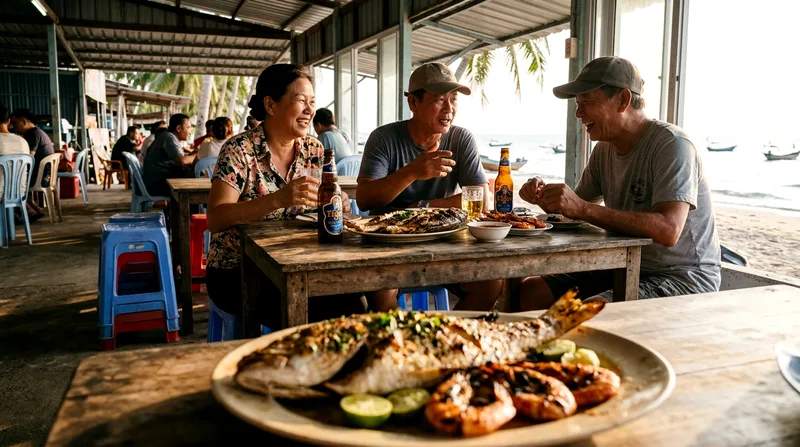
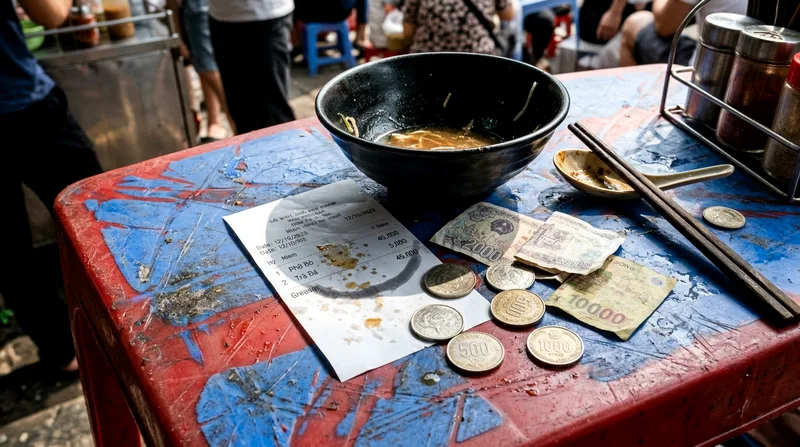
Da Nang street food prices remain genuinely low if you know where to look. A plate of mi quang (the regional turmeric noodle dish) typically costs 25,000–40,000 VND ($1–1.60) from a street stall or local eatery. Banh mi runs 15,000–25,000 VND. A sit-down meal at a mid-range restaurant with air conditioning — think grilled seafood or a Vietnamese-Western fusion menu — lands between 120,000–250,000 VND per main. Western comfort food (burgers, pizza) catering to tourists costs the most relative to quality: 150,000–300,000 VND for something you could get better and cheaper locally.
Street food versus tourist restaurants
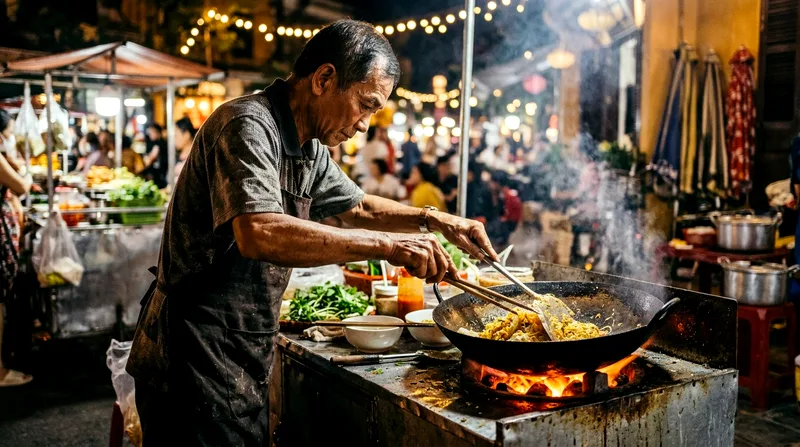
The gap between a plastic-stool noodle stall and a laminated-menu tourist restaurant on the same street can be 300% for a dish that's objectively less fresh at the pricier spot, because turnover is slower. My rule: if a menu has photos of every dish and multiple languages printed on laminated card, you're paying for translation, not flavor. The busiest stalls — where locals queue at lunch — are almost always both cheaper and better, and a meal there plus a fresh coconut (15,000–20,000 VND) covers you for under $3.
Beer at convenience stores, local bars and beach clubs
Da Nang's price of beer varies more than almost any other line item. A large Bia Hoi or local Saigon/333 beer at a street-side bar costs 15,000–25,000 VND (roughly $0.60–$1). The same bottle from a 7-Eleven-style convenience store runs 12,000–18,000 VND. Step into a beachfront bar on My Khe and that identical beer becomes 40,000–60,000 VND, and a beach club cocktail easily hits 150,000–250,000 VND ($6–10) — still cheaper than Bali or Phuket beach clubs, but a clear tourist surcharge for the view and the loungers. If you're drinking regularly, buying a few cans from a minimart and watching the sunset from the sand costs a tenth of the beach-club tab for a near-identical experience.
Getting Around and Attraction Costs
Da Nang is flatter and easier to navigate than Hanoi's Old Quarter, and transport costs reflect that simplicity once you know the going rates. Da Nang taxi fares typically start at 11,000–15,000 VND flagfall, adding roughly 15,000–17,000 VND per kilometer. Grab (the dominant ride-hailing app across Vietnam) usually comes in 10–20% cheaper than hailed taxis and removes the haggling entirely, since the fare's fixed before you get in.
A budget traveler in Da Nang can get by on roughly $25 a day, while a comfortable mid-range trip with one major attraction runs closer to $60–80.
Da Nang prices compared: daily budget tiers at a glance
| Budget Tier | Daily Spend (VND) | Daily Spend (USD, approx.) | Typical Accommodation | Typical Transport |
|---|---|---|---|---|
| Backpacker/Budget | 500,000–700,000 | $20–28 | Dorm or basic guesthouse | Walking, bus, occasional Grab bike |
| Mid-range | 1,200,000–2,000,000 | $48–80 | 3-star hotel, private room | Grab car, scooter rental |
| Luxury | 3,500,000+ | $140+ | Beachfront resort | Private driver, airport transfers |
Figures are indicative and change with exchange rates and season; always check current prices before booking tours or hotels.
Taxi and ride-hailing fare comparisons
A Grab car from the airport to My Khe Beach (about 3km) runs 50,000–70,000 VND; a metered taxi covering the same distance can land similar or slightly higher, depending on traffic and driver honesty. A Grab bike (motorbike taxi) for short hops across town costs as little as 15,000–25,000 VND. Renting a scooter yourself costs 120,000–180,000 VND per day ($5–7), which pays for itself after two or three taxi trips — though it comes with real risk if you're not confident riding in mixed traffic, and most travel insurance policies exclude scooter accidents unless you hold a valid motorcycle license.
Entry fees for top attractions
Da Nang attraction tickets vary widely by what's included. The Marble Mountains charge a modest entrance fee (around 40,000 VND) plus an optional elevator fee (around 15,000 VND) to skip the stairs. Ba Na Hills, including the Golden Bridge, is the city's priciest single ticket — the cable car and park access package runs into the millions of VND for a family of four, so check current prices before booking since it's revised periodically. Vinpearl Land's combo ticket (amusement park, often bundled with the aquarium) is similarly positioned as a full-day, higher-cost outing rather than a quick stop. Budget travelers often do one "splurge" attraction and skip the rest, which is a reasonable strategy given how steeply these add up compared to, say, wandering Hoi An Ancient Town, where the Old Town ticket is comparatively cheap for a half-day of sightseeing.
Smart Ways to Save Without Missing Out
Saving money in Da Nang isn't about avoiding experiences — it's about timing and reading the room. The biggest lever most travelers ignore is simply when they visit.
Timing, off-season and booking early
Peak season (roughly June through August, plus the Tet holiday in late January or February) pushes hotel rates up 30–50% and fills popular restaurants with tour groups, which slows service and nudges prices up subtly. Shoulder months — March to May, or September — bring quieter beaches, lower humidity than peak summer, and noticeably better hotel rates without the typhoon risk that shows up October through November. Booking accommodation 4-6 weeks ahead for peak season dates locks in rates before they climb; for shoulder season, even two weeks ahead is usually fine. Pre-booking a Ba Na Hills or Marble Mountains tour online, rather than buying on arrival, sometimes avoids same-day price bumps and guarantees entry during busy weekends — compare current tour prices before you commit to a specific date.
Spotting tourist mark-ups and negotiating at markets
At Con Market or Han Market, prices on unlabelled goods (clothing, souvenirs, dried fruit) are opening offers, not fixed prices — expect to negotiate down 20-40% from the first number, especially for anything bought in multiples. Food stalls inside these markets, by contrast, usually have fairly fixed, fair prices since locals eat there too. The clearest tourist mark-up pattern: menus without prices printed, staff who quote you a number verbally, or a price that changes once they notice you're foreign. Walk into any place and check if a laminated price list is visible — if it is, you're probably paying the same as everyone else. Threads on Reddit's Vietnam and backpacking forums are a decent gut-check for current typical prices if something feels off.
What Not to Skimp On
Cutting costs is smart; cutting corners on a few specific things isn't. There are two places I'd actively discourage saving money in Da Nang: street food hygiene shortcuts and transport insurance.
Safety, transport and insurance
Travel insurance that explicitly covers scooter accidents costs a little more than basic policies — often just $20-40 extra for a two-week trip — but it matters enormously if you're planning to rent a bike, since Da Nang traffic mixes scooters, buses, and tour coaches on the same roads with limited lane discipline. Skipping this to save a few dollars is the single worst false economy I'd flag here. Similarly, don't chase the absolute cheapest street stall purely on price if it has no visible turnover or ice that's clearly been sitting out — food poisoning will cost you a day of your trip and a clinic visit, which in Da Nang can run $30-80 out of pocket without insurance. I'd also avoid the cheapest unlicensed "taxi" drivers who approach you directly outside the airport or Han Market rather than using Grab or a marked taxi rank — the fare risk and safety risk aren't worth the marginal savings.
Da Nang Booking and Budget Checklist
Before you book anything, pick your tier — budget, mid-range, or luxury — and build your trip length around it rather than deciding day by day, which is how costs creep. For a two-week Vietnam trip that includes Da Nang alongside Hoi An and maybe Hue, a mid-range daily budget of $60-70 gives you comfortable meals, a scooter or regular Grab rides, and one or two paid attractions like Ba Na Hills without feeling every transaction. If you're also weighing Hanoi or Ho Chi Minh City for the same trip, know that Da Nang generally sits mid-pack: pricier than inland Hue, cheaper than Phu Quoc's resort zones. Lock in accommodation first since that's the cost most affected by season, then book any big-ticket attraction (Ba Na Hills especially) a couple of weeks ahead, and leave food and local transport unbudgeted in detail — just carry a daily cash estimate in VND and let it flex. Compare current prices for hotels and tours before you book rather than relying on numbers you saw months ago; Da Nang's tourist infrastructure is expanding fast and pricing shifts with it.
Frequently asked questions
Is Da Nang expensive for tourists?
Not by European or North American standards, but it's no longer Vietnam's cheapest city either. Beachfront areas like My Khe charge 15-30% more than inland neighborhoods for the same meal, and big attractions like Ba Na Hills carry genuinely steep ticket prices. Overall, Da Nang costs more than Hue but less than Phu Quoc or Nha Trang for comparable quality.
How much does a meal cost in Da Nang?
Street food runs 25,000-40,000 VND ($1-1.60) for noodles or banh mi. A sit-down restaurant meal with air conditioning costs 120,000-250,000 VND per main. Tourist-oriented Western food, especially near the beach, often runs 150,000-300,000 VND for less quality than you'd get at a busy local stall.
How much does beer cost in Da Nang?
A local beer at a street bar or convenience store costs 12,000-25,000 VND (around $0.50-$1). The same beer at a beachfront bar or beach club on My Khe can cost 40,000-60,000 VND, sometimes more for imported brands or cocktails, which commonly run 150,000-250,000 VND.
How much should I budget per day in Da Nang?
Budget travelers can manage on 500,000-700,000 VND ($20-28) a day covering basic lodging, street food, and local transport. Mid-range travelers should plan 1,200,000-2,000,000 VND ($48-80), which allows a 3-star hotel, mixed dining, and occasional paid attractions. Luxury travel starts around $140 a day and climbs with resort stays.
Is $1000 enough for two weeks in Da Nang?
Yes, comfortably, if you're traveling at a budget-to-low-mid-range level — that's roughly $70 a day, enough for a private guesthouse room, regular street food, Grab rides, and a couple of paid attractions like the Marble Mountains. It gets tighter if you add multiple big-ticket days at Ba Na Hills or Vinpearl Land, or stay in beachfront resorts throughout.