Compare Hai Van Pass tour options by jeep, Easy Rider motorbike and private car. Find the best Da Nang loop fit for your comfort level, plus booking tips.
Which Hai Van Pass Tour Suits You
The Hai Van Pass — the "Ocean Cloud Pass" separating Da Nang from Hue — is the kind of road that gets photographed from every switchback for good reason. Cloud sits on the ridge line most mornings, the sea drops away on one side, and the old French bunkers at the summit give you a reason to stop that isn't just the view. The real question isn't whether to see it; almost everyone doing a Da Nang loop or a Hoi An to Hue transfer should. The question is how.
A hai van pass tour comes in three broad shapes: riding pillion with an Easy Rider guide, bouncing along in an open-air jeep, or sitting in a private car with air conditioning and a driver who knows every good coffee stop. Each gets you the same ridge, the same bunkers, the same view of Lang Co beach curling into the lagoon below — but the experience in between stops differs enormously.
Thrill-seekers and first-time riders
If you've never ridden a motorbike and have no plans to start on a mountain pass with hairpin bends and the occasional truck doing something unwise, don't let anyone talk you into "just hopping on." An Easy Rider tour puts an experienced local driver in control — you're a passenger, not a rider — which removes most of the actual risk. It's still a bike, exposed to wind, rain and road grit, so it's genuinely for people comfortable with two wheels and some physical discomfort over three to four hours. First-time visitors who want the open-air thrill without learning to ride themselves are the best fit here, not total novices hoping to drive solo.
Families, couples and solo travelers
Families with young kids should skip the motorbike option outright — there's no good way to secure a child safely on the back of a bike for three hours, and most reputable operators won't take children under a certain age anyway (ask when booking, it varies). A private car or a jeep with proper seating works far better. Couples are split roughly down the middle in practice: some want the romance-of-the-road motorbike experience, others would rather talk to each other without shouting over wind noise, which points them toward a car. Solo travelers often gravitate to Easy Rider tours because it's a built-in way to get local conversation and photos of yourself actually on the road, not just the view.
Hai Van Pass Tour Types Compared
Three categories, three very different days. The motorbike/Easy Rider tour is the most immersive and the most physically demanding — you feel the temperature drop as you climb, smell the sea air, and stop wherever you point. The jeep tour splits the difference: open-air like a motorbike, but with proper seating and a roof you can put up if the weather turns, often running in small convoys. The private car is the comfort option — glass between you and the elements, but also you and the full sensory experience of the ride.
Where you start and end matters too. A straightforward Da Nang loop treats the pass as a there-and-back scenic drive, often bundled with the Marble Mountains or a Son Tra Peninsula detour. A Hoi An to Hue route (or the reverse) treats the pass as a one-way transfer, which makes more sense logistically if you're already relocating between cities rather than doing a day trip from Da Nang.
Private cars offer the most comfort and flexibility, motorbike tours the most open-air immersion, and jeeps sit in between on both counts.
Hai Van Pass tour types compared: comfort, group size and flexibility
| Tour Type | Typical Duration | Group Size | Comfort Level | Flexibility | Best For |
|---|---|---|---|---|---|
| Easy Rider motorbike | 3-4 hours (loop) | 1 passenger per driver | Low (exposed, physical) | High (stops anywhere) | Solo travelers, thrill-seekers |
| Open-air jeep | 4-6 hours (loop) | 4-8 per jeep, shared or private | Moderate | Moderate | Small groups, photographers |
| Private car | 4-7 hours (loop or transfer) | 1-4 passengers | High (AC, seats) | High (custom stops) | Families, couples, seniors |
| Hoi An to Hue transfer (car/jeep) | 5-7 hours one-way | Varies by booking | Moderate to high | Moderate | Travelers relocating to Hue |
Figures are typical ranges; actual duration depends on number of stops and traffic, so confirm details before booking.
Comparison table: comfort, flexibility and group size
Below is a general comparison. Treat the duration and group size figures as typical ranges — actual tours vary by operator, so confirm specifics on the listing before booking.
Da Nang loop versus Hoi An to Hue routes
A Da Nang loop is the better pick if your hotel base is Da Nang or Hoi An and you want to be back in your own bed that night — it usually runs four to six hours round trip including stops, and you lose no travel days. The Hoi An to Hue (or Hue to Hoi An) version is a one-way transfer tour, typically five to seven hours covering more ground, useful if Hue is next on your itinerary anyway. Doing both — a loop day trip and later a one-way transfer — is redundant; pick one based on whether Hue is actually on your route. Travelers who skip Hue entirely (increasingly common given Hoi An and Da Nang absorb most trip time) should just do the loop and treat Hai Van Pass as a half-day excursion, not a transfer.
Easy Rider and Motorbike Tours
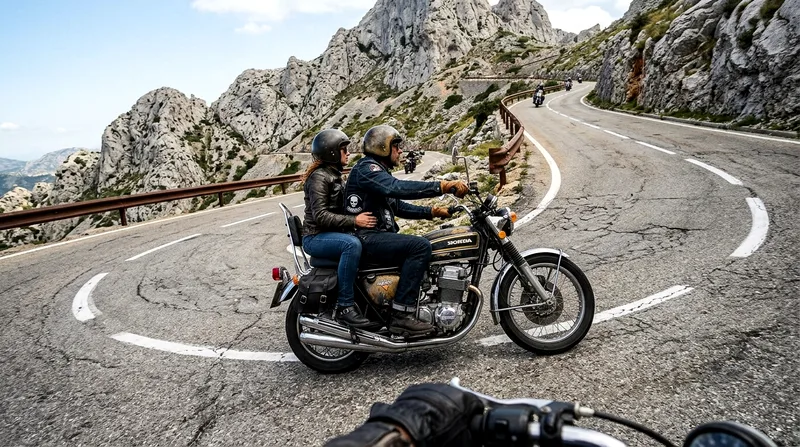
"Easy Rider" started as a loose network of motorbike guides, mostly built around Dalat, and the term has spread to describe any guided pillion motorbike tour across Vietnam, including Hai Van Pass runs out of Da Nang or Hue. You sit behind an experienced local driver who handles the actual riding — no license or motorbike experience required from you, which is the main selling point over a self-drive rental.
What a typical day includes
A standard loop departs Da Nang mid-morning, climbs the pass with a stop at the old bunkers near the summit for photos, descends toward Lang Co beach for a break by the lagoon, and often includes a coffee stop at a roadside spot with mountain views on the way back. Some itineraries add a detour to Elephant Spring (Suoi Voi) for a swim in natural rock pools, or a stop near a waterfall if timing allows. Expect to be on the bike, with stops, for most of a half or full day — budget three to six hours depending on how many detours are bundled in.
Safety and difficulty
The pass itself is paved and well-maintained, but it has real hairpin turns, fog patches near the summit, and occasional heavy vehicle traffic since a tunnel now carries most through-traffic below the mountain, leaving the pass road quieter but not empty. Riding pillion with a guide is considerably safer than self-driving a rental scooter if you've never ridden one — guides know the road, the weather patterns and where trucks tend to cut corners. Helmets should be provided and are non-negotiable; if an operator doesn't offer one without asking, that's a red flag. Rain gear matters more than people expect — the pass gets genuine downpours outside the dry months, and riding wet and cold for an hour is miserable.
Jeep and Private Car Tours
If the idea of a motorbike — even as a passenger — doesn't appeal, jeep and private car tours cover the same ground without asking you to grip a handlebar or a stranger's jacket for hours.
Open-air jeep experience
Jeep tours, often run in military-style vehicles, have become a popular middle ground: you get open sides and unobstructed views like a motorbike, but with proper seats, seatbelts and room for a small group or family. They typically run in small convoys of several jeeps, which suits people who want some camaraderie with other travelers rather than a private experience. The trade-off is less flexibility than a private car — if you want to linger twenty extra minutes at Lang Co beach or skip a planned coffee stop, you're on the convoy's schedule, not your own.
Private car for flexibility and comfort
A private car with driver is the most comfortable and most customizable option, and it's the one I'd recommend for seniors, families with young kids, or anyone prone to motion sickness on winding roads — air conditioning and a closed cabin make a real difference on a hot, humid day. You can ask the driver to stop wherever you like, spend longer at a viewpoint, or skip a crowded tourist stop entirely. The downside is cost per person is higher than a shared jeep or Easy Rider seat if you're traveling solo, since you're effectively paying for a private vehicle; it becomes much better value once you're a group of three or four splitting the fare.
What to Look for When Booking
Not all Hai Van Pass tours are built the same, even within one category, and the difference usually shows up in the fine print rather than the headline description.
Inclusions, stops and group size
Check whether lunch, bottled water and entrance fees (for stops like Elephant Spring) are included or extra — some listings bundle everything, others charge for the swim stop separately. Confirm group size for jeep tours; a "private jeep" booking and a "shared jeep" booking can look identical in a search result but differ heavily in flexibility and price. For Easy Rider tours, ask whether it's one driver per passenger or if passengers double up — doubling up usually means a less experienced driver handling two people's weight on technical turns, worth avoiding if you can book a one-to-one ratio instead.
Cancellation terms and reviews
Weather on the pass can turn quickly — heavy rain or fog can make a jeep or motorbike tour genuinely unpleasant and occasionally unsafe, so check the cancellation and rescheduling policy before you pay. Platforms like Viator and TripAdvisor aggregate reviews across operators, and reading the most recent ones (not just the top-rated all-time ones) tells you more about current guide quality and vehicle condition than star ratings alone. Look specifically for mentions of helmet quality, guide English level, and whether the itinerary matched what was advertised — those three details separate a solid operator from one coasting on old reviews.
When to Book Your Tour
Timing affects both the view and the comfort level more than most people expect on a route this short.
Best season and weather
Central Vietnam's dry season, roughly February to August, gives you the best odds of clear summit views and a dry ride, with February to May generally cooler and more comfortable than the hot peak of June to August. The wet season, September through January, brings a real risk of fog blanketing the summit — which can turn your big photo stop into a wall of gray — plus rain that makes open jeeps and motorbikes considerably less pleasant. If you're traveling in the wet months, lean toward the private car option for the weather protection, or build flexibility into your schedule to shift the tour day if the forecast looks bad.
How far ahead to reserve
For a standard Da Nang loop in shoulder season, booking two to three days ahead is usually enough — supply is decent and operators run daily departures. During peak dry-season months and around major holidays (Tet, in particular, disrupts transport and pricing nationwide), book a week or more ahead, especially for private car or small-group jeep tours where capacity is limited. One-way Hoi An to Hue transfer tours tied to onward travel plans are worth locking in a few days earlier than a flexible loop, simply because you don't want a transport gap on the day you're meant to check into a Hue hotel. Always compare current prices and reviews on your booking platform of choice shortly before paying — availability and small operator changes shift more often than people assume.
Frequently asked questions
What are the best motorbike tours of Hai Van Pass?
Look for Easy Rider-style tours with a one-driver-per-passenger ratio, included helmets, and stops at the summit bunkers plus Lang Co beach. The best ones keep groups small (two to six bikes) so you're not stuck waiting at every photo stop, and the guide speaks enough English to explain the history of the bunkers and the old route before the tunnel existed.
Can you do a Hai Van Pass tour by car or jeep?
Yes — private car and open-air jeep tours are both common and cover the same route as motorbike tours, just with seats, seatbelts, and no need to hold on. Jeeps run in small convoys and suit groups wanting an open-air feel with more safety margin; private cars suit families, seniors or anyone prioritizing comfort over the open-road feel.
What is included in an Easy Rider tour?
Typically a helmet, the guide-driver and bike, fuel, and stops at the Hai Van Pass summit and Lang Co beach. Many add a coffee stop and sometimes a detour to Elephant Spring or a waterfall. Lunch and entrance fees to optional stops are often extra — check the listing before booking rather than assuming they're bundled.
How long is the Hai Van Pass tour?
A Da Nang loop tour with stops usually runs four to six hours round trip. A one-way Hoi An to Hue (or reverse) transfer tour covering the pass typically takes five to seven hours including stops, since it covers more distance than a simple loop back to the same city.
Is the Hai Van Pass dangerous to ride?
The road itself is paved and maintained, with hairpin bends, occasional fog near the summit, and lighter traffic than before since a tunnel diverted most through-traffic below. Riding as a passenger with an experienced Easy Rider guide is considerably safer than self-driving a rental scooter without local road experience, and most serious incidents involve inexperienced self-drivers rather than guided tours.