Plan a day at My Khe Beach in Da Nang: sunbed zones, sunrise activities, rentals, water sports and safety tips for the best time to visit.
Why Visit My Khe Beach
My Khe Beach runs for roughly 900 meters of easily walkable sand along Da Nang's eastern edge, though the same stretch of coastline continues for several kilometers under different local names. It's flat, wide, and backed by a line of hotels, seafood shacks and low dunes rather than cliffs or rock, which makes it unusually easy to access — no steep paths, no tide-dependent causeways. For a city beach in central Vietnam, the sand quality is good: pale, fine, and raked clean most mornings by beach staff working the resort frontage.
What makes My Khe worth building a day around isn't drama — it's convenience. You can swim before breakfast, shower off, and be at the Dragon Bridge or the Marble Mountains by mid-morning. Few other Vietnamese beach towns let you combine a proper swim with a full city itinerary on the same day without a long transfer.
My Khe wins on access and facilities, while Non Nuoc and An Bang (Hoi An) offer a quieter trade-off a short drive away.
My Khe Beach compared with other Da Nang-area and central Vietnam beaches
| Beach | Distance from Da Nang center | Crowd level | Best for | Facilities |
|---|---|---|---|---|
| My Khe Beach | 10-15 min drive | High, especially weekends | Easy city-beach swim, water sports | Sunbeds, showers, water sports operators |
| Non Nuoc Beach | 20-25 min drive | Low to moderate | Quiet swim, Marble Mountains combo | Basic, fewer rentals |
| An Bang Beach (Hoi An) | 45-60 min drive | Moderate | Laid-back beach day with cafes | Beach bars, loungers |
| Nha Trang Beach | Separate city, flight or long drive | High | Long beach walks, nightlife nearby | Extensive, resort-dense |
| Phu Quoc beaches | Separate island, flight required | Low to moderate | Calmer water, snorkeling | Resort-dependent |
Crowd levels and facilities change seasonally and with local development; confirm current conditions before planning around them.
Location and the China Beach name
My Khe sits on the eastern side of Da Nang, facing the South China Sea, with Son Tra Peninsula rising at its northern end and Non Nuoc Beach continuing south toward the Marble Mountains. The "China Beach" name dates to the Vietnam War era, when American servicemen used the stretch as an R&R beach — it's the same name later borrowed for the 1988 US television series. Locals and most current signage use "My Khe," and that's the name you'll want for maps, taxis and address searches; "China Beach" still shows up in older guidebooks and some hotel branding, but it isn't an official or commonly used local term today.
How it compares with other Da Nang beaches
My Khe is the busiest and most developed of Da Nang's beaches, which is exactly why some travelers prefer Non Nuoc Beach a few kilometers south — quieter, backed by fewer towers, and closer to the Marble Mountains. If you're coming from Hoi An, that town's own beaches (An Bang, Cua Dai) feel more low-key and food-stall-driven, with a slower pace than My Khe's resort strip. Nha Trang's beach is comparable in scale and swimmer traffic but sits in a more built-up, older tourist city; Phu Quoc's beaches are generally calmer and better for snorkeling but require a flight to reach. If your priority is a convenient swim without leaving Da Nang, My Khe wins on access alone.
Things to Do at My Khe Beach
My Khe Beach activities split naturally into early morning and late afternoon, with the midday sun being too harsh for most people to sit out comfortably for long stretches — between roughly 11am and 3pm, shade becomes essential rather than optional. Plenty of people treat this as a two-session beach: sunrise swim and walk, then a return in late afternoon for sunset and the evening seafood stalls that set up along Vo Nguyen Giap road.
Sunrise activities and bookable experiences
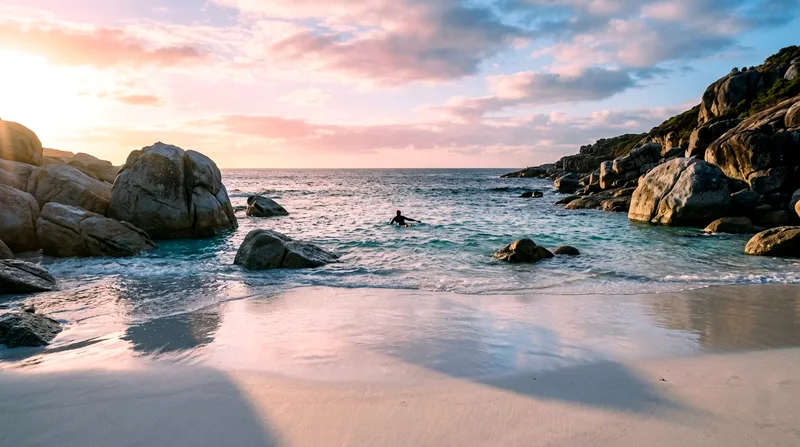
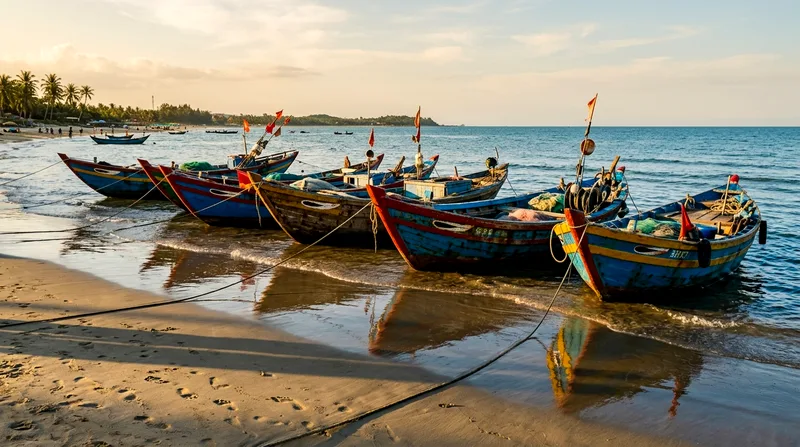
Sunrise at My Khe is genuinely worth setting an alarm for. Local fishermen still launch round basket boats (thung chai) from the shore in the early hours, and the light over the water before the heat builds is far more pleasant for walking or jogging than any other time of day. Some operators run early-morning yoga sessions or guided jogging/photography walks along the beachfront — availability and timing vary by season and operator, so check current listings and confirm start times when booking rather than assuming a fixed schedule. If you want the beach at its calmest, aim to be on the sand by 5:30–6am; by 8am it's noticeably busier with both tourists and local swimmers doing their daily laps.
Water sports and beachside fun
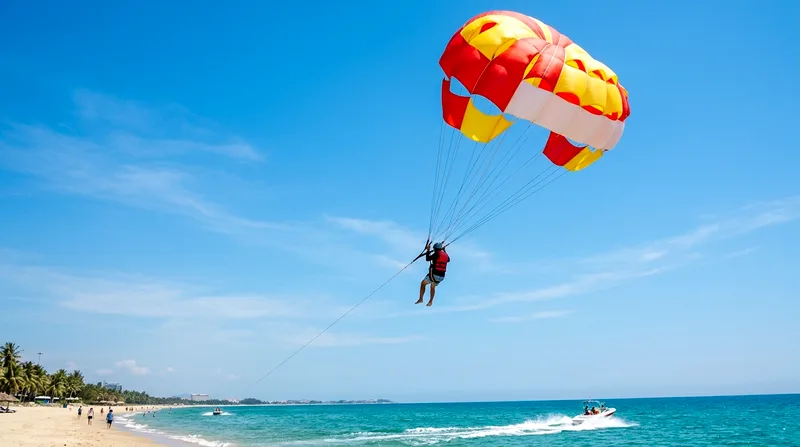
My Khe Beach water sports are concentrated in specific operator zones rather than spread evenly along the sand — look for clusters of jet skis, parasailing boats and banana boats, usually set back from the main swimming flags to keep motorized traffic away from swimmers. Typical options include parasailing, jet ski rental, banana boat rides and occasionally flyboarding, run by small local operators rather than big international brands. Prices aren't fixed or published reliably, so compare current prices and operators on the day — rates can shift with season and demand. One caution: these motorized zones aren't always clearly marked for pedestrians, so keep an eye on boat traffic if you're swimming or walking near them, particularly around midday when activity peaks.
Sunbeds, Rentals and Facilities
Facilities along My Khe are solid by Southeast Asian beach standards — better organized than most stretches in Nha Trang, less commercialized than the beach clubs you'll find on Phu Quoc. The beachfront is divided into sections, many attached to the hotels and restaurants behind them, so the specific setup (chair style, shade structure, service) varies as you move along the sand.
Sunbed and umbrella rental basics
Sunbeds and umbrellas are available to rent in most sections of the beach, typically bundled together for a per-day or per-half-day rate, often with a minimum spend at the attached café or restaurant instead of a flat cash fee. Don't expect a receptionist or booking system — you simply pick an open spot, and staff come around to arrange payment. Rates are not standardized across the beach, so it's worth asking two or three staff before settling in if price matters to you; a spot right at the shoreline usually costs more than one set back near the restaurant tables.
Showers, restrooms and parking
Public showers and restrooms exist at intervals along the beach, usually free or for a very small fee, though quality varies — some are basic cold-water rinse stations attached to restaurants. If cleanliness matters, use the facilities tied to a hotel or restaurant where you've bought something, rather than the more basic public blocks. Parking for motorbikes is widely available in small lots just off Vo Nguyen Giap road for a small fee; car parking is more limited and concentrated near the larger resorts, so if you're driving, allow extra time to find a spot during weekends and holidays.
Swimming Safety and Lifeguard Zones
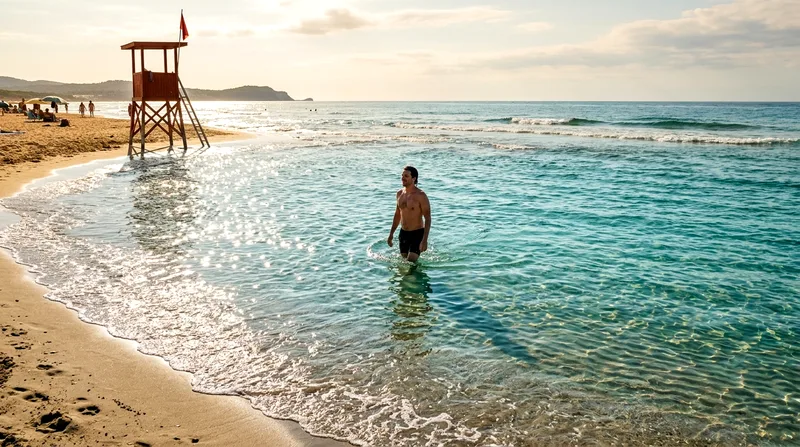
My Khe Beach safety comes down to one simple habit: swim only between the flags, in sections with a visible lifeguard tower. Da Nang's city-managed beaches, including My Khe, have designated lifeguarded swimming areas marked by colored flags and buoy lines, patrolled during daylight hours — but coverage isn't uniform along the whole stretch, and lifeguard presence typically winds down in the evening even though people keep swimming after dark.
Flags, currents and swimming hours
Rip currents are the real hazard at My Khe, not depth — the seabed drops off gradually, but currents can pull swimmers sideways or out past the breakers, especially during the rainier months from around September to December when swells pick up. Lifeguards generally patrol daytime hours, roughly from early morning into early evening, with reduced or no coverage after dark. If a flag is red, don't go in — this isn't a bureaucratic formality, it reflects genuine rip current risk that has led to drownings at this and nearby beaches in past years. Stick to swimming during daylight in the clearly lifeguarded sections, and avoid swimming alone far from the flagged zones.
Local beach rules and sensible precautions
A few practical rules apply in practice even where they're not posted in English: keep children within arm's reach in the water, don't swim right after a heavy meal or alcohol (common advice from local lifeguards), and avoid the areas near jet ski and boat launch zones when swimming. Jellyfish appear occasionally, mostly in the hotter months — not a constant problem, but worth asking beach staff if there's been recent activity before a long swim. If you're an inexperienced swimmer or traveling with young kids, the safest bet is simply staying close to a lifeguard tower and never swimming beyond chest depth unless you're confident in open water.
Best Time to Visit and Getting There
The best time to visit My Khe Beach is roughly February through August, when the sea is calmer and rainfall is lower; April to June often hits the sweet spot of warm water, manageable heat and lower crowds than peak summer (July–August), when domestic tourism surges and the beach gets genuinely crowded on weekends. September through December brings Da Nang's rainy season and rougher surf, with occasional storm activity — swimmable on calmer days, but check conditions rather than assuming.
Seasons, water conditions and crowd patterns
Water temperature stays comfortably warm most of the year, rarely dropping below the low-20s Celsius even in cooler months, so cold water is never really the issue — wave height and current strength are. Weekday mornings outside of July–August are reliably quiet; Vietnamese public holidays (Tet in particular, and national holidays in late April/early May) bring heavy crowds and should be avoided if you want space on the sand.
Independent access versus guided options
Most travelers visit My Khe independently — it requires no ticket, no booking and no guide. From central Da Nang it's a 10–15 minute taxi or ride-hail trip (Grab works reliably in the city), or a flat, flat walk/bike ride if you're staying along the beachfront hotel strip on Vo Nguyen Giap road. Guided options exist mainly as add-ons — sunrise yoga, water sports packages, or half-day combination tours pairing My Khe with Son Tra Peninsula — and make sense if you want structure or don't want to arrange rentals yourself. For a simple swim-and-relax day, though, paying for a guided beach tour is unnecessary; save guided bookings for the activities that actually need logistics, like water sports equipment or a Son Tra scooter tour.
Nearby Add-Ons Around Da Nang
My Khe's real advantage is what surrounds it. Few beach destinations in Vietnam let you pair a morning swim with a half-day of sightseeing as easily as Da Nang does.
Son Tra Peninsula and Dragon Bridge
Son Tra Peninsula rises directly north of My Khe and is reachable by motorbike or car in about 20–30 minutes, with a winding road up to the Lady Buddha statue and viewpoints over the whole bay — worth a half-day if you have one to spare, and a reasonable contrast to flat beach time. Back in the city, the Dragon Bridge (Cau Rong) is the obvious evening add-on: it breathes fire and water on weekend nights (typically Saturday and Sunday around 9pm, though timing can shift, so confirm locally), and it's a 10-minute drive from the beach, making a sunset-swim-then-bridge evening an easy combination.
Hoi An and Non Nuoc Beach
Non Nuoc Beach, immediately south of My Khe near the Marble Mountains, is the quieter alternative if My Khe feels too busy — same coastline, fewer crowds, less infrastructure. Hoi An Ancient Town is about 45 minutes to an hour south by taxi or organized shuttle, and many travelers base themselves in one city and day-trip to the other; Da Nang gives you the beach and the Ba Na Hills cable car day trip, while Hoi An gives you the old town and its own beaches. Doing both from a Da Nang base, with My Khe as your default beach day, is a common and sensible split.
Frequently asked questions
Is My Khe Beach swimmable?
Yes, My Khe is swimmable most of the year, with warm water and a gradually sloping seabed. The main risk is rip currents, which strengthen during the rainier months (roughly September to December). Swim within the flagged, lifeguarded sections and avoid the water entirely when red flags are up.
Are there lifeguards at My Khe Beach?
Yes, Da Nang stations lifeguards along managed sections of My Khe during daylight hours, typically from early morning into early evening. Coverage thins out or stops after dark, so swimming at night carries real risk even though some people still do it — stick to daytime swims in flagged zones.
Is China Beach the same as My Khe Beach?
Yes — "China Beach" is the same stretch of coastline, a name that dates back to the Vietnam War when it served as an R&R spot for American troops. Today locals and official signage use "My Khe," and that's the name to use for maps and directions.
What water sports are available at My Khe Beach?
Parasailing, jet ski rental and banana boat rides are the main options, run by small local operators in designated zones along the beach. Flyboarding is occasionally available too. Prices and availability shift by season and operator, so compare options and confirm current prices on the day rather than assuming a fixed rate.
When is the best time to visit My Khe Beach?
February through August generally offers calmer water and lower rainfall, with April to June often the best balance of warm weather and manageable crowds. July and August bring peak domestic tourism and busier sand. September through December is rainier with rougher surf, so check conditions before planning a swim-focused trip.