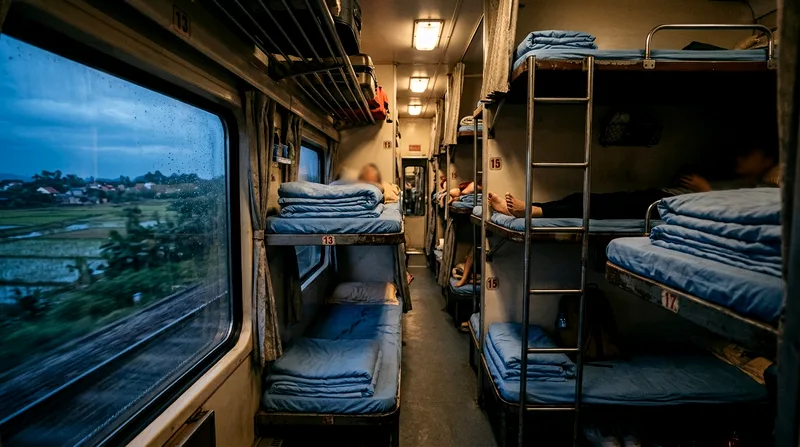
Book the Hanoi to Da Nang train with confidence: compare seat and sleeper classes, pick the best carriage and buy tickets without agency mark-ups.
Hanoi to Da Nang Train Overview
An overnight train down Vietnam's North-South railway sounds romantic until you're comparing fares and realizing every agency quotes a different number for the same berth. That's the real problem most travelers hit when researching the Hanoi to Da Nang train — not whether to take it, but how to book it without paying a markup for something Vietnam Railway sells directly.
The good news: this is one of the most straightforward long-distance rail routes in Southeast Asia to book yourself, once you understand the class names and where tickets actually originate.
Route, distance and journey time
The line covers roughly 790 kilometers, and most Reunification Express services take between 15 and 17 hours depending on the specific train and how many stops it makes along the way. That's longer than the 90-minute flight or the 16-18 hour overnight bus, but the train runs through the night and drops you near the coast at Da Nang Railway Station in the morning, having crossed the Hai Van Pass with sea views that neither plane nor bus can match.
Don't expect a bullet train. Vietnam's rail infrastructure is colonial-era in parts, single-tracked for long stretches, and trains sometimes wait in sidings for opposing traffic. Build in slack if you have a tight connection — arriving two or three hours late isn't common, but it happens often enough that you shouldn't book a same-day onward flight out of Da Nang immediately after arrival.
Reunification Express services explained
"Reunification Express" is the collective name for the Hanoi-Ho Chi Minh City trains, numbered SE1 through SE19 and beyond, running in both directions. Da Nang is a mid-route stop, not an endpoint, so you're booking a segment of a longer journey rather than a dedicated Hanoi-Da Nang service.
Different numbered trains have different departure times, rolling stock, and reputations. The SE19, for instance, is often cited by travelers as one of the better-maintained overnight options, but Vietnam Railway periodically rotates carriages and schedules, so treat any specific train number as a starting point for research, not a guarantee. One newer addition worth knowing about is the privately-operated Lotus Train, which runs upgraded carriages with nicer sleeper cabins on certain Reunification Express services — it costs more than standard soft sleeper but is a genuine step up in comfort if you want it.
What Your Train Ticket Includes and Excludes
A ticket buys you a seat or berth and nothing else by default. Don't assume meals, bedding upgrades, or wifi are automatically included just because you paid for a sleeper — some are, some aren't, and it varies by class and train.
Onboard amenities and food
Soft sleeper cabins come with sheets, a pillow, and a blanket as standard. Hard sleeper berths usually get a thin mattress pad and sometimes a sheet, but don't expect hotel-grade linens. Air conditioning is standard on sleeper carriages on most Reunification Express trains, though older hard-seat carriages can still run with just fans.
Food service is inconsistent. Some trains have a dining car or a trolley selling instant noodles, snacks, and bottled water; others barely stock anything. Bring your own food and at least 1.5 liters of water per person — bánh mì or sticky rice bought at Hanoi Railway Station before boarding is the easy move. Charging ports exist in newer carriages but aren't guaranteed in every berth, so a power bank is worth packing.
Luggage and ID requirements
You'll need your passport (or a copy, though the original is safer) to collect tickets and sometimes to board — station staff do spot checks. Luggage allowance isn't strictly enforced with scales like at an airport, but each berth or seat realistically fits one large backpack or suitcase plus a day bag; there's no dedicated luggage car. Keep valuables on your person, not in overhead racks, especially in hard sleeper carriages where strangers share your compartment for the full overnight ride.
Berth and Seat Classes Compared
Vietnam Railway sells roughly four tiers on the Hanoi-Da Nang route: hard seat, soft seat, hard sleeper, and soft sleeper. Each has a distinct trade-off between price and comfort, and the "hard" versus "soft" naming is a direct translation from Vietnamese rail terminology, not a marketing gimmick — it genuinely describes the cushioning.
Soft sleeper offers the best balance of privacy and price for the overnight Hanoi to Da Nang route, while soft seat only makes sense for short daytime segments.
Hanoi to Da Nang train classes compared: comfort, privacy and typical cost
| Class | Privacy | Comfort for overnight | Typical cost (VND, approx.) |
|---|---|---|---|
| Hard seat | None | Poor | Lowest |
| Soft seat | None | Fair | Low |
| Hard sleeper (6-berth) | Low | Good | Mid |
| Soft sleeper (4-berth) | Moderate | Very good | Higher |
| Lotus Train upgraded cabin | High | Best available | Highest |
Figures are approximate and change by train number, season and booking channel — confirm current fares on the official Vietnam Railway site.
Soft seat vs hard sleeper vs soft sleeper
Soft seat is an upright, air-conditioned reclining seat — fine for short daytime hops but rough for 15+ hours overnight. Hard sleeper gives you a bunk in an open six-berth compartment with no door, cheaper than soft sleeper but noisier and less private, since corridors and compartments blend together. Soft sleeper is a four-berth compartment with a door that closes, thinner mattresses than a hotel but genuinely sleepable, and it's the class most couples, solo travelers, and families book for this route.
Prices fluctuate by train number and season, but soft sleeper on this route has typically run somewhere in the VND 900,000-1,500,000 range per berth, hard sleeper noticeably less, and soft seat less again — always confirm current fares on Vietnam Railway's official booking page before paying, since these numbers shift and third-party sites add their own margin on top.
Four-berth vs six-berth cabins
The four-berth soft sleeper cabin is the sweet spot for most travelers: a lockable door, two lower and two upper bunks, and enough space to sit up without hitting your head. Six-berth hard sleeper cabins stack three bunks per side with no door, which means more foot traffic, more light from the corridor, and strangers walking past your feet at 2am. If you're traveling as a couple or with one other person, book both lower berths in a four-berth cabin together rather than splitting across classes — it's a small cost difference for a much better night's sleep.
Choosing the Best Carriage and Berth
Which carriage you're assigned matters almost as much as which class you book. Newer carriages, often used on flagship trains like certain SE19 departures, have better-sealed windows, working air conditioning, and cleaner toilets. Older carriages on lesser-known train numbers can feel tired — rattling fittings, squat toilets only, dimmer lighting. There's no foolproof way to guarantee a newer carriage when booking, but reading recent traveler reports for your specific train number before you commit helps.
Lower, middle and upper berths
In both four-berth and six-berth configurations, the lower berth costs slightly more and for good reason: more headroom, easiest access, and it doubles as communal seating during the day since cabin-mates tend to sit there rather than climb up. Middle and upper berths (hard sleeper only has middle and upper above the lower) are cheaper but cramped — you can't sit upright, and the upper berth sits closest to the ceiling lighting and corridor noise.
If you're a senior traveler or dealing with knees that don't love ladders, pay the small premium for a lower berth. Light sleepers should avoid berths nearest the toilet end of the carriage, since foot traffic and door noise continue most of the night. Families booking for children often take a lower berth for the child and the upper directly above for an adult, keeping everyone in the same four-berth cabin.
Where to Buy Tickets Without Mark-Ups
This is where most people overpay. Street-level travel agencies in Hanoi's Old Quarter will happily book your Hanoi to Da Nang train ticket for a fee stacked on top of the base fare, sometimes without clearly disclosing it. You don't need them.
Official Vietnam Railway channels
Vietnam Railway operates its own online booking portal where you can search trains by date, see real-time seat and berth availability, and pay by international card. This is the lowest-markup way to buy, since you're paying the base fare directly. The interface has improved over recent years but can still be clunky for first-time users unfamiliar with Vietnamese train numbering — expect to cross-reference train numbers (SE1, SE3, SE19, etc.) against departure times shown in 24-hour format. E-tickets are typically emailed as PDFs; print or save them offline, since station wifi isn't reliable.
Third-party platforms and fees
If the official site frustrates you, platforms like Rail.ninja or Omio act as booking intermediaries with English-language support and clearer interfaces, charging a service fee on top of the base fare. That fee is usually transparent and modest compared to what a walk-in agency might add, and for travelers who want customer support in their own language or a smoother refund process, it's a reasonable trade. Compare the all-in total against the official site before booking — sometimes the convenience fee is small, sometimes it isn't, and you should see the number before you commit rather than after. Refund and cancellation policies differ sharply between the official site (which has stricter, fee-based cancellation rules) and these platforms, so read the fine print, especially around peak travel dates like Tet, when demand spikes and refunds become harder to process.
Is the Train Worth It?
The honest answer: it depends on what you're optimizing for. If time is scarce, flying wins outright — Hanoi to Da Nang is about 90 minutes by air versus 15-17 hours by rail. If budget and scenery matter more, the train wins, especially the stretch along the coast near the Hai Van Pass as you approach Da Nang, which rivals anything you'll see doing the Hai Van Pass motorbike tour from Hue or Da Nang itself.
Train vs flight vs bus by traveller type
Solo travelers and couples with flexible schedules get real value from the overnight soft sleeper — you save a hotel night and arrive with a built-in experience, something neither a 90-minute flight nor a cramped sleeper bus offers. Families with young kids usually do better flying; a toddler doesn't care about the Hai Van Pass at 5am and a short flight limits meltdown time. Senior travelers who find airports stressful often prefer the train's slower pace and the ability to walk around the carriage, though the lack of elevators at some stations and the climb into upper berths are real downsides to weigh.
European and other long-haul travelers doing a full North-South trip — Hanoi, then Da Nang or Hoi An, then on to Ho Chi Minh City — often use the train as one leg and fly the other, splitting the difference rather than committing fully to rail or air for the entire route. Budget backpackers comparing this to the overnight bus should know the train is usually pricier but meaningfully more comfortable and safer on sharp mountain curves than a sleeper coach taking the same coastal road.
Frequently asked questions
How long is the train ride from Hanoi to Da Nang?
Most Reunification Express trains take between 15 and 17 hours to cover the roughly 790-kilometer route, though delays from single-track sections or signal waits can add an hour or two. Build buffer time into any onward plans in Da Nang rather than booking a tight connection.
Which berth class should I book for the sleeper train?
Soft sleeper in a four-berth cabin is the best balance of privacy, comfort, and cost for most travelers. Choose a lower berth if you can — it has more headroom, easier access, and avoids the climb and ceiling-light glare of the upper bunks.
Where can I buy Hanoi to Da Nang train tickets without agency mark-ups?
Book directly through Vietnam Railway's official online booking portal for the lowest base fare. If you prefer an English-friendly interface, platforms like Rail.ninja or Omio charge a modest, usually transparent service fee — compare the all-in total against the official site before paying.
Is there a luxury train from Hanoi to Da Nang?
There's no fully separate luxury train, but the privately-operated Lotus Train runs upgraded sleeper carriages on certain Reunification Express services, offering nicer cabins, better linens, and more reliable amenities than standard soft sleeper for a higher fare.
Is it better to fly or take the train from Hanoi to Da Nang?
Fly if you're short on time — it's about 90 minutes versus 15-17 hours by rail. Take the train if you want the coastal scenery near the Hai Van Pass, prefer to skip a hotel night by sleeping on board, or you're already planning a slower overland route through Hue or Hoi An.